
 novo nordisk
The Cold-Chain Infrastructure
Novo Nordisk's Supply Chain
Has Been Waiting For.
As GLP-1 demand strains U.S. cold-chain capacity and regulatory requirements tighten, Langham's Plainfield facility delivers the only purpose-built, 320,000 sq ft pharmaceutical cold storage platform already operating at scale.
The Capacity Crisis
Nobody's Pricing In
The U.S. pharmaceutical storage market is entering a structural supply-demand mismatch that will define competitive positioning for the next decade. Understanding the numbers is the first step toward managing the risk.
Controlled Room Temperature (CRT) Storage: 2025 vs. 2030
Current U.S. CRT capacity sits at roughly 2.5–3 million pallets, while 2030 demand is projected at 6–6.5 million pallets — a ~3.5 million pallet shortage driven by oral solid dosage growth (5.97% CAGR), API stockpile mandates, and CDMO expansion.
GLP-1 Demand Surge
Ozempic, Wegovy, and next-generation semaglutide therapies are straining 2–8°C capacity nationwide. Novo Nordisk's oral semaglutide pipeline will compound refrigerated storage pressure through 2030.
CRT Capacity Gap
Oral solid dosage forms growing at 5.97% CAGR account for 60% of therapeutics. The executive order mandating API stockpiles for 26 critical drugs (expanding to 86) is accelerating CRT demand beyond any historical model.
Tightening Regulatory Environment
DSCSA, GDP, and FDA oversight now require CRT to meet the same validated temperature control, humidity management, real-time monitoring, and GMP compliance as cold storage. Legacy warehouses are not equipped.
Temperature-Excursion Losses
Last-mile complexity for direct-to-patient models creates new excursion risk vectors. A single unmonitored break in the cold chain can invalidate an entire shipment of high-value biologics.
Biologics & Biosimilars Pipeline
The biologics and biosimilars pipeline is outpacing 2–8°C buildout. Langham's 46,000 validated pallet positions represent a structural advantage that cannot be replicated in 12–18 months.
CDMO Expansion
Contract development and manufacturing organizations expanding for niche therapies are creating demand for co-located, GMP-compliant storage that can absorb surge volumes without compromising validated environments.
The Next 3–5 Years:
What Supply Chain Executives Must Plan For Now
The challenges facing pharmaceutical supply chains are not linear. The next wave of complexity will require infrastructure investments that take years to validate and certify. Organizations that delay will find themselves locked out of compliant capacity.
Cell & Gene Therapy Ultra-Cold Requirements
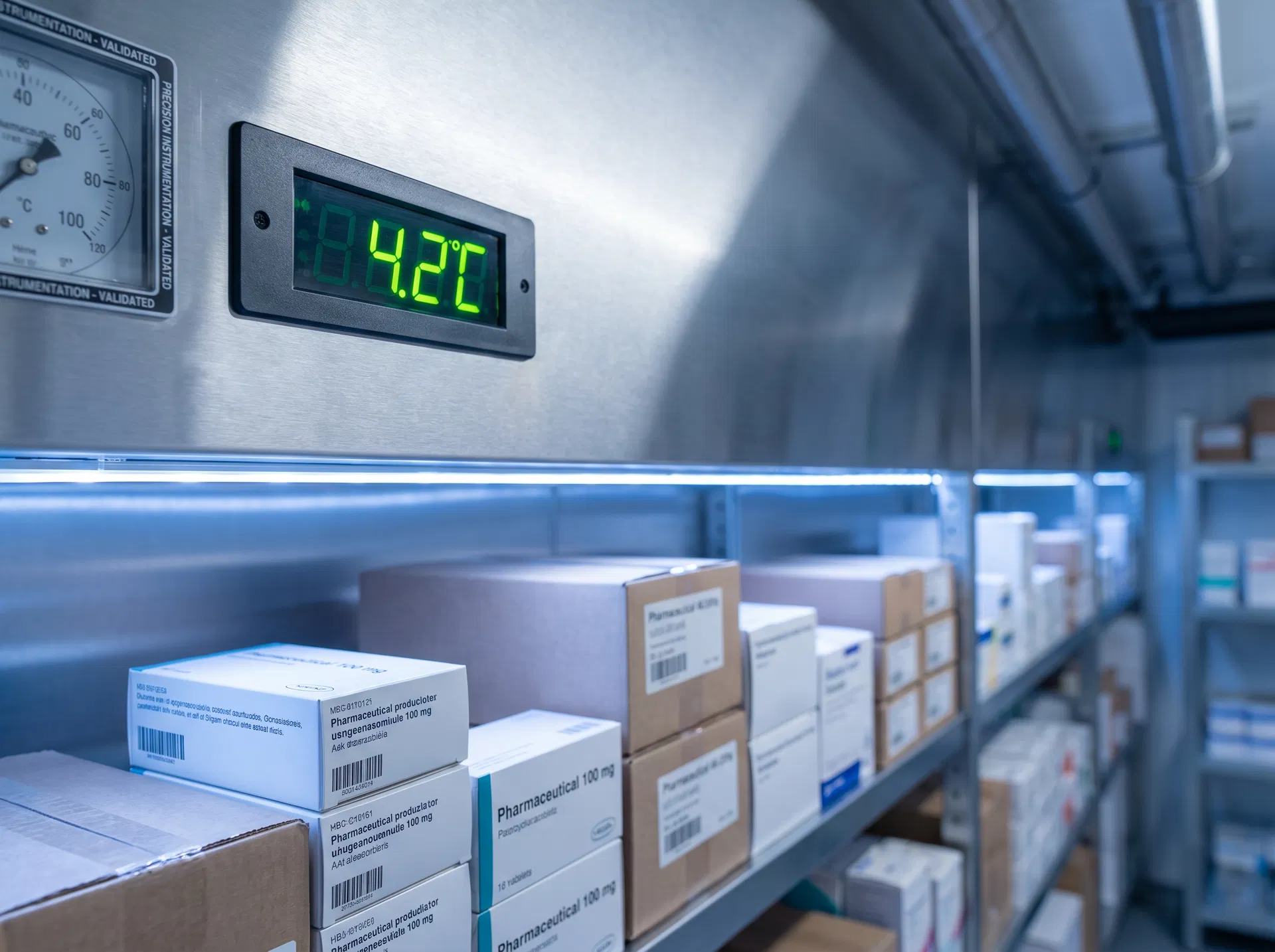
-20°C / -80°CCell and gene therapies require -20°C to -80°C validated environments with uninterrupted power. Langham's dual 1,000 KW generator redundancy and UL Central Station monitoring are already in place.
Direct-to-Patient & Home Delivery Shift
Last MileThe shift to direct-to-patient models demands last-mile cold-chain capability with real-time GPS and temperature monitoring from origin to doorstep. Excursion risk multiplies at every handoff.
AI-Driven Supply Chain Visibility
AI · BIPharmaceutical clients are demanding predictive inventory intelligence, real-time excursion alerts, and business intelligence dashboards. Langham's FDA 21 CFR Part 11 compliant WMS and BI stack are production-ready.
Sustainability & Refrigerant Regulation
ESG · EPAEPA refrigerant phase-down regulations and ESG reporting requirements are forcing cold-chain operators to upgrade aging refrigeration systems. Langham's Plainfield facility was built with modern, compliant mechanical systems.
Geopolitical Risk & API Onshoring
API StockpileExecutive orders mandating domestic API stockpiles for 86 critical drugs are creating urgent demand for validated, secure domestic storage. Langham's TAPA Level A security and C-TPAT certification make it the natural home for strategic reserves.
Plainfield, Indiana:
Built for What the Market Needs Next
While competitors are scrambling to retrofit legacy warehouses, Langham's Plainfield facility is already operating at the scale and specification the next decade demands. Every capability below is live, validated, and available today.
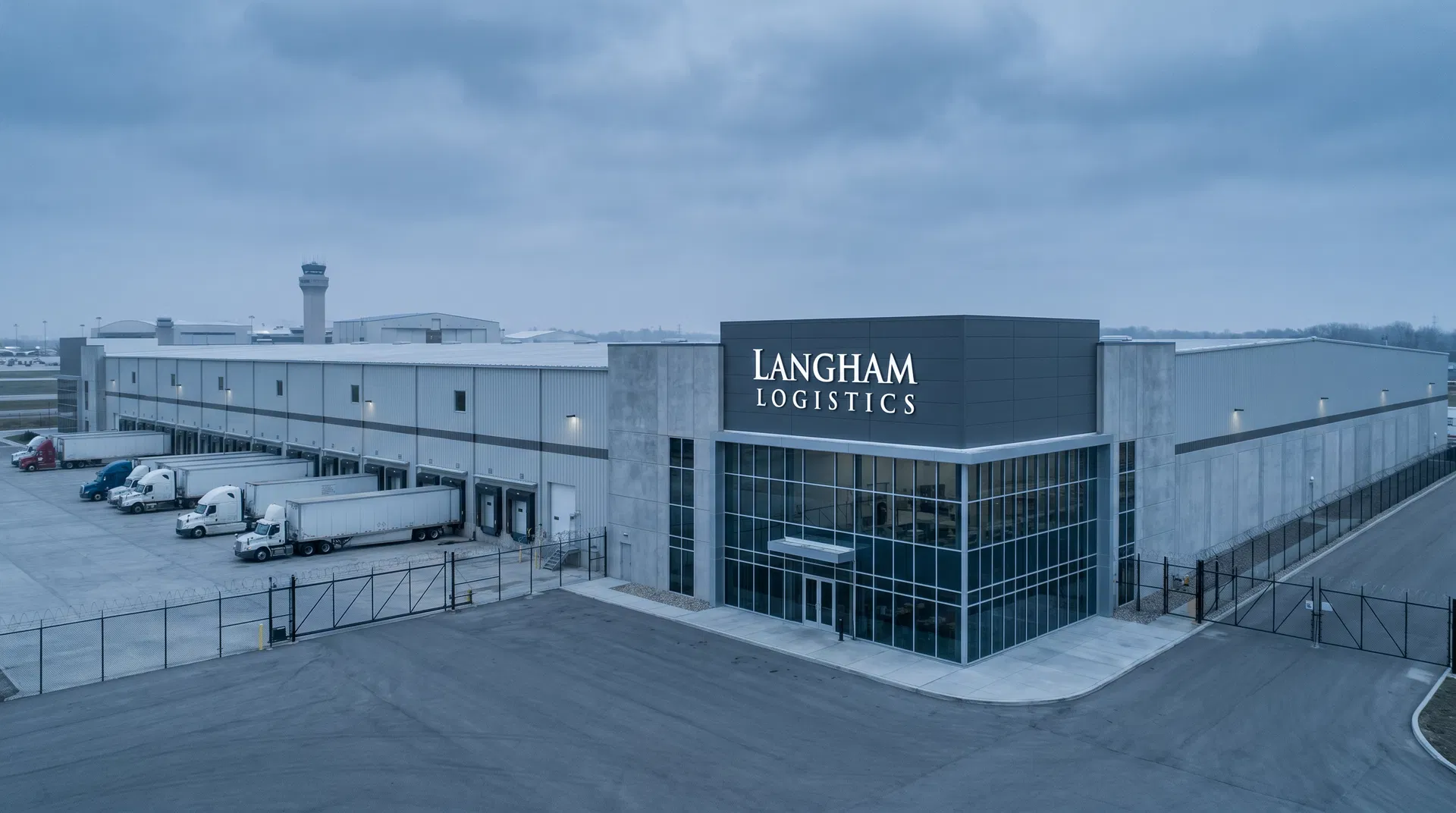
Adjacent to Indianapolis International Airport
Industry Challenge → Plainfield Solution
Every challenge from Sections 2 and 3, mapped to a specific Plainfield capability.
| Industry Challenge | Plainfield Solution |
|---|---|
| ⚠GLP-1 demand surge straining 2–8°C capacity nationwide | ✓46,000 validated 2–8°C pallet positions — the largest single-site cold storage platform in the U.S., available today |
| ⚠CRT capacity gap: ~3.5M pallet shortage by 2030 | ✓320,000 sq ft of cGMP-compliant space supporting CRT (15–25°C), refrigerated (2–8°C), frozen (-20°C), and ULT (-80°C) environments |
| ⚠DSCSA, GDP, and FDA oversight requiring validated environments | ✓FDA 21 CFR Part 11 compliant WMS, Board of Pharmacy licensed, GDP-compliant, DSCSA serialization tracking, validated temperature mapping |
| ⚠Temperature excursion losses and last-mile complexity | ✓24/7 UL Central Station monitoring, real-time GPS & temperature tracking, 66+ HD security cameras, cloud-based third-party surveillance |
| ⚠Biologics pipeline outpacing 2–8°C buildout | ✓Fully demised and validated 2–8°C cold dock with 25 dock doors; purpose-built for biologics at commercial scale |
| ⚠Cell & gene therapy ultra-cold (-20°C / -80°C) requirements | ✓ULT freezers (-60°C to -80°C), dual 1,000 KW generator redundancy, independent HVAC/refrigeration systems per storage location |
| ⚠Direct-to-patient and home delivery shift | ✓Clinical trial kitting, qualified packaging services, thermal protective packaging expertise, Boards of Pharmacy licensed 3PL |
| ⚠AI-driven supply chain visibility expectations | ✓FDA 21 CFR Part 11 WMS, drone-based inventory counting, BI dashboards, real-time excursion alerts, automated access control |
| ⚠Geopolitical risk and API stockpile onshoring mandates | ✓TAPA Level A security (highest global tier), C-TPAT certified, biometric access control, RFID tracking, premier location adjacent to IND airport |
Certifications, Compliance & Track Record
Langham's credentials are not aspirational — they are current, audited, and verifiable. Every certification below reflects an active, maintained standard.
Active Certifications & Registrations
Full-Spectrum Pharmaceutical Capabilities
- →FDA 21 CFR Part 11 compliant WMS
- →Top-tier mechanical refrigeration systems
- →HVAC qualified to ISPE standards
- →Fully independent HVAC & refrigeration by location
- →2 MW emergency backup power generator
- →Separate inbound receipt and storage areas
- →Drone-based inventory counting technology
- →Ocean, Air, Freight, Truckload, Expedited
- →LTL, Intermodal, Cross-docking
- →GMP Transportation Specialists
- →Freight Management & Logistics Technology
- →24×7 tracking with business intelligence
- →Real-time GPS & temperature monitoring
- →Validated packaging solutions
- →Clinical Trial Kitting and Distribution
- →Thermal Protective Packaging Expertise
- →Qualified Packaging Services
- →Boards of Pharmacy Licensed 3PL
- →Serialization & DSCSA compliance
- →Re-palletization and case picking
- →Network coordination & freight management
The Capacity Window
Is Open Now.
Pharmaceutical supply chain executives who secure validated cold-chain capacity today will have a structural cost and compliance advantage through 2030. Langham's Plainfield facility has available capacity — but it won't last.
- →30-minute call with a Langham Life Sciences specialist
- →Facility tour available at Plainfield, IN
- →Custom capacity and compliance assessment
- →No obligation — just the data you need to decide